


- Simple extractions
- Surgical Extractions
- Third Molar & Wisdom Tooth Extractions
Dental emergencies can't wait. Whether you have a severe toothache, a broken or knocked-out tooth, a lost filling or crown, or swelling and pain, call us right away. We always try to provide treatment on the same day whenever possible, so you don't have to wait in pain. Call us at (253) 573-0070.
Welcome to Everlast Family & Cosmetic Dentistry — we're glad you're here. We are accepting new patients, and your first visit is about getting to know you and your teeth. No lectures, no pressure, and no surprises on cost.
What to Expect at Your First Visit
- A complete exam and any x-rays needed
- A thorough, gentle cleaning
- Time to talk through anything that concerns you: pain, appearance, or cost
- A clear plan with exact costs explained before any treatment begins
What to Bring
- A photo ID
- Your dental insurance card, if you have one
- A list of any medications you take
No Insurance? No Problem.
Our Clerri membership plan keeps preventive care affordable without insurance: Adult Complete is $34/month and includes 2 cleanings and 2 exams a year, routine x-rays, 1 emergency exam a year, and 20% off treatments. For larger treatments, Cherry payment plans let you split the cost into monthly payments.
Ready to Book?
Call (253) 573-0070 or book online: https://schedule.jarvisanalytics.com/frame?eoid=2154&elid=2000000000179
Everlast Family & Cosmetic Dentistry · 3609 S 19th St, Tacoma, WA 98405
Professional cleanings and routine exams are the simplest way to protect your smile. During a cleaning (prophylaxis), we gently remove plaque and tartar above the gumline that brushing and flossing at home can miss. At the same visit, a routine exam and digital X-rays help us catch small problems — early decay, gum irritation, or a filling that needs attention — before they become painful or expensive.
We recommend a cleaning and exam every six months. Visits are gentle and unhurried, and we will always explain what we find honestly, with no pressure to accept treatment you do not need.
Ready to Book?
Call (253) 573-0070 or book online: https://schedule.jarvisanalytics.com/frame?eoid=2154&elid=2000000000179
Good daily habits do most of the work between visits, and we are happy to show you how. At every visit, our hygiene team takes time to coach you on the techniques that keep your teeth and gums healthy:
Brush twice a day for two minutes with a soft brush, holding it at a 45-degree angle to the gumline.
Clean between your teeth every day with floss or an interdental cleaner.
Use a fluoride toothpaste to strengthen enamel and help prevent decay.
Limit sugary and acidic drinks, which feed the bacteria that cause cavities and gum problems.
Everyone's mouth is different, so your coaching is personalized — we will show you exactly what works best for your teeth, gums, and any appliances or restorations you have, and answer any questions you have about your routine.
Why is a deep cleaning needed? When plaque and tartar build up below the gumline, brushing, flossing, and even a regular cleaning cannot reach them. Left there, that bacteria inflames the gums and causes gum disease — bleeding, swelling, bad breath, receding gums, and eventually the bone loss that loosens teeth. A deep cleaning treats this at the source: scaling removes plaque and tartar from the tooth surfaces and from below the gumline, and root planing smooths the tooth roots so the gums can reattach and heal. It is the first and most important treatment for gum disease — and the best way to stop it before it costs you your teeth. If your gums bleed when you brush, a deep cleaning may be exactly what you need. Call (253) 573-0070 to schedule yours.
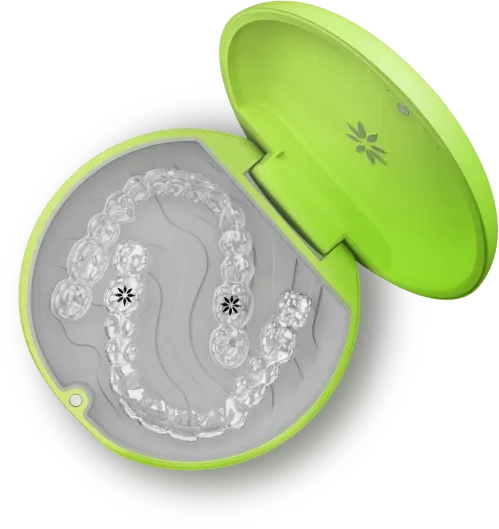
Straighten your smile — discreetly, comfortably, and without wires. Invisalign® treatment uses a series of custom-made, virtually invisible clear aligners to gradually and precisely move your teeth into place. Your Invisalign doctor will create a unique, digital treatment plan that maps out the exact movements of your teeth. Your Invisalign clear aligners are then designed to apply the right amount of force to the right place at the right time based on your plan. Because the aligners are removable, you can eat, brush, and floss as usual — and because they are nearly invisible, most people will never notice you are wearing them. At Everlast Family & Cosmetic Dentistry, your treatment is planned and supervised by Dr. Kim at every step, from your first consultation to your final smile.


Zirconia Crown
Do you want to learn about Zirconium Crowns to discover if zirconium crowns are the right choice for you? Zirconium crowns and bridges are so strong they can be used anywhere in the mouth. Zirconium crowns can withstand the biting pressure of the front teeth as well as back teeth grinding. The look of zirconium crowns and bridges is so close to natural teeth that it is hard to tell the difference and it is this quality which makes it very useable within dental work. Zirconium crowns can be fixed using traditional dental cements. Zirconium crowns have quickly become the preferred material for dental crowns. Zirconium is a very strong substance that can endure wear and tear of everyday use. When looking at Zirconium crowns from an aesthetic point it is clear and very similar to a natural tooth and reflects light the same way. This may be important if your new crowns are on the front of your mouth and it is particularly relevant in cases where the crown will be seen next to the natural teeth. Porcelain is the conventional material used for the new crowns however, Full porcelain can chip or break. This is overcome by making the crowns from the metal, in this case metal zirconia, then merge the porcelain on the outside. Zirconia metal gives the strength while the porcelain gives the appearance of a normal tooth. Zirconium crowns allow light to pass as a normal tooth would and that gives a natural look, unlike other metal cores that are block the light.

Gold Crown
Although not as popular a treatment choice for esthetic reasons, gold crowns are still indicated in some instances. For example, patients with strong bites and those with parafunctional habits (such as grinding or clenching) might be better served with a gold crown. The traditional restorative material can provide stronger support to the remaining healthy tooth structure. Gold crowns offer a level of durability that is appropriate for teeth located in the back of the mouth (such as the molars), where they will not be highly visible. Gold crowns tend to offer greater longevity and require less preparation than porcelain and porcelain-fused-to-metal crowns. When chewing, gold tends to be less abrasive to the opposing tooth than porcelain. This helps to prevent wearing of the teeth.
Bridge
A dental bridge replaces one or more missing teeth with a fixed, natural-looking restoration. The bridge is anchored to the healthy teeth on either side of the gap (or to dental implants), with a lifelike replacement tooth suspended between them. It restores your ability to chew and speak comfortably, keeps your remaining teeth from shifting out of place, and completes your smile. Every bridge is custom-made to match the color and shape of your natural teeth, so it blends right in. If you are missing a tooth, call (253) 573-0070 to find out whether a bridge is right for you.

A dental implant is an artificial tooth root that is placed into your jaw to hold a replacement tooth or bridge. Dental implants may be an option for people who have lost a tooth or teeth due to periodontal disease, an injury, or some other reason
ARE YOU A CANDIDATE FOR DENTAL IMPLANTS?
The ideal candidate for a dental implant is in good general and oral health. Adequate bone in your jaw is needed to support the implant, and the best candidates have healthy gum tissues that are free of periodontal disease.
- Replacing a Single Tooth If you are missing a single tooth, one implant and a crown can replace it
- Replacing Several Teeth If you are missing several teeth, implant-supported bridges can replace them
- Replacing All of Your Teeth If you are missing all of your teeth, an implant-supported full bridge or full denture can replace them.
 Root canal therapy is a treatment used to repair and save a tooth that is badly decayed or infected. A root canal procedure is performed when the nerve of the tooth becomes infected or the pulp becomes damaged. During a root canal procedure, the nerve and pulp are removed, and the inside of the tooth is cleaned and sealed. Root canal procedures have the reputation of being painful. Actually, most people report that the procedure itself is no more painful than having a filling placed. The discomfort experienced in the period leading up to seeking dental care is truly painful, not the root canal procedure itself. What Are the Signs That Root Canal Therapy Is Needed? Signs you may need root canal therapy include: 1. Severe toothache pain upon chewing or application of pressure 2. Prolonged sensitivity (pain) to hot or cold temperatures (after the heat or cold has been removed) 3. Discoloration (darkening) of the tooth 4. Swelling and tenderness in nearby gums 5. A persistent or recurring pimple on the gums * Sometimes no symptoms are present.
Why a veneer?
Veneers are an excellent alternative to crowns in many situations. They provide a much more conservative approach to changing a tooth's color, size or shape. Veneers can mask undesirable defects, such as teeth stained by tetracycline and damage due to an injury or as a result of a root-canal procedure. They are ideal for masking discolored fillings in front teeth. Patients with gaps between their front teeth or teeth that are chipped or worn may consider veneers. Generally, veneers will last for many years, and the technique has shown remarkable longevity when properly performed.
What happens during the procedure?
Patients may need up to three appointments for the entire procedure: diagnosis and treatment planning, preparation and bonding.
It's critical that you take an active role in the smile design. Spend time in the planning of the smile. Understand the corrective limitations of the procedure. Have more than one consultation, if necessary, to feel comfortable that your dentist understands your objectives.
To prepare the teeth for the veneers, the teeth are lightly buffed to allow for the small added thickness of the veneer. Usually, about half a millimeter of the tooth is removed, which may require a local anesthetic. Composite resin veneers are generally done in one appointment. After the tooth is prepared, the dentist carefully bonds and sculpts the composite material onto your teeth. For ceramic veneers, a mold is taken of the teeth, which is sent to the laboratory for the fabrication of the veneers. This may take several days. If the teeth are too unsightly, a temporary veneer can be placed, at an additional cost.
When your ceramic veneers are ready, the dentist places each veneer on the teeth to check their fit and get a sense of the shade or color. While the veneers are resting on your teeth, view the results, and pay particular attention to the color. At this point, the color of the veneers can still be adjusted with the shade of the cement to be used. The color cannot be altered after veneers are cemented. To apply the veneer, the tooth is cleansed with specific chemicals to achieve a bond. Once a special cement is sandwiched between the veneer and tooth, a light beam hardens the cement.
How about maintenance?
For about a week or two, you will go through a period of adjustment as you get used to your "new" teeth that have changed in size and shape. Brush and floss daily. After one or two weeks, your dentist will ask you to return for a follow-up appointment.
What are realistic expectations?
Veneers are reasonable facsimiles of natural teeth, not perfect replacements. It's not uncommon to see slight variations in the color of veneers upon close inspection, as this occurs even in natural teeth. Nevertheless, this procedure can greatly enhance your smile and can heighten self-esteem.
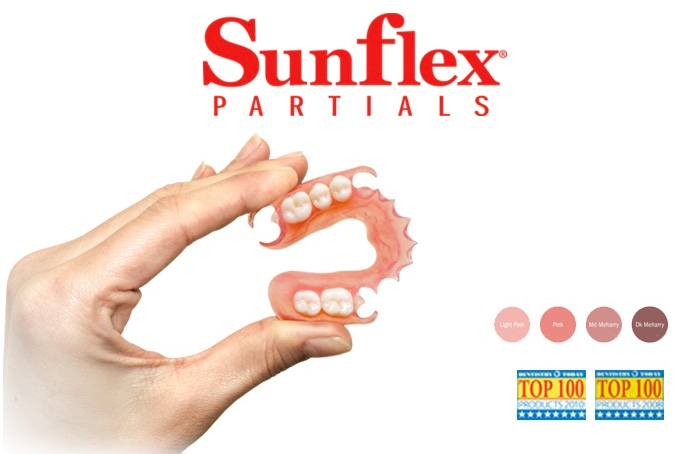
In comparison to acrylic partials, Sunflex® partial ntures are lightweight, more comfortable and practically invisible, with no metal clasps. They offer the perfect degree of flexibility, are more stain-resistant and do not discolor, warp or become brittle. They are also easy to adjust in-office, and teeth and clasps can be added later
Full Denture
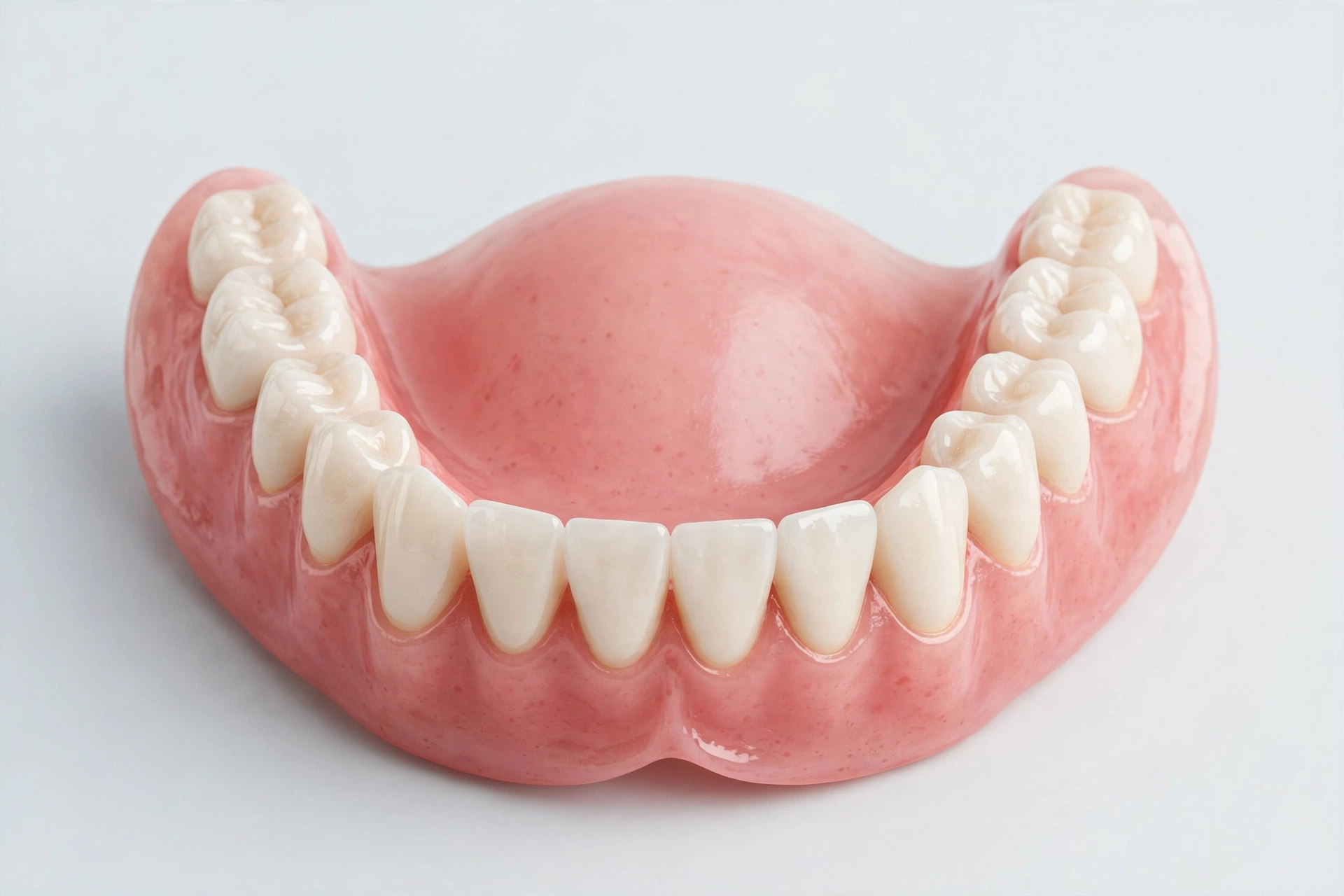
A full (complete) denture replaces all of the teeth in the upper or lower jaw when no natural teeth remain. Each denture is custom-made from impressions of your mouth, so it fits the shape of your gums and restores your smile, your bite, and support for your cheeks and lips. With a well-made full denture you can eat, speak, and smile with confidence again. The process takes a few visits: consultation and impressions, bite records and a try-in to check the fit and appearance, then delivery and fine adjustments until it feels right. We will also show you how to care for your denture so it stays comfortable and lasts for years. If you are missing all of your teeth — or your current denture no longer fits — call us at (253) 573-0070 to schedule a consultation.
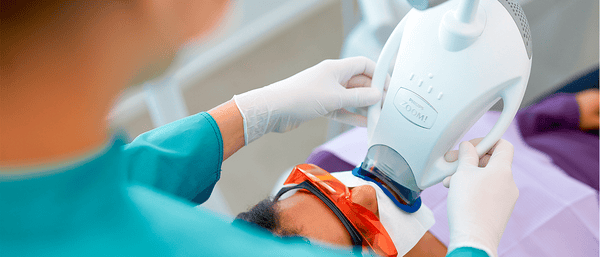
A) Office Bleach: First teeth cleaning & polishing is done, then your gums & lips are covered by a protecting gel and then the bleaching agent is applied on the teeth, waited for some time and then a special light is exposed on the teeth. This is done for about 3 to 4 times in an hour or in 3 to 4 sittings, making the teeth whiter than before.
B) Home Bleach: After teeth cleaning & polishing is done, your upper and lower teeth impression (measurement) is taken and sent to the lab for making the soft bleaching (Vulcanized Rubber) Trays. Next day the Trays and the bleaching agent (gel) are given to you & the procedure to put the gel in the Trays & to wear it is explained to you
Philips Zoom Whitening
Clinically proven to whiten up to 8 shades in one visit, Zoom! WhiteSpeed is the #1 dentist procedure in the US. Offering a fast, effective, and comfortable solution, create a noticeably brighter smile in just 45 minutes.
Botox
Refreshed looks, real relief. Best known for softening forehead lines, frown lines, and crow's feet, BOTOX® also has an important place in dentistry: precisely placed injections relax the overworked jaw muscles behind TMJ pain, chronic clenching, and teeth grinding — easing the tension that wears teeth down and causes headaches and jaw soreness. Treatment takes about 10 to 15 minutes with no downtime, results develop over the following days, and the effects typically last three to four months. If you are curious what BOTOX® could do for your smile — or your jaw pain — call (253) 573-0070.
Jaw pain, clicking, headaches, and a jaw that feels sore or locks when you chew are often signs of TMJ disorder (TMD) — a problem with the jaw joint and the muscles that move it. The good news is that most TMJ pain can be relieved without surgery. We find the cause first, then treat it step by step, starting with the most conservative options.
Symptoms We Evaluate
- Jaw pain or tenderness
- Clicking, popping, or locking of the jaw
- Headaches, earaches, or pain in the face and neck
- Pain or tiredness when chewing
- Grinding or clenching your teeth (bruxism), or waking up with sore teeth and jaw muscles
- Trouble opening your mouth fully
Diagnosis
A TMJ exam looks at how your jaw opens and moves, how your teeth come together (your bite), and the muscles of your head and neck. When needed, imaging helps us see the joint itself. An honest diagnosis matters: jaw pain can also come from a tooth problem, and treating the wrong cause wastes your time and money.
Treatment Options
- Custom night guard (occlusal splint): A guard fitted to your teeth and worn at night reduces clenching and grinding and takes pressure off the joint.
- Botox for TMJ: When overworked jaw muscles are the main cause, therapeutic Botox can relax them, easing clenching pain, jaw tension, and tension headaches.
- Bite adjustment: When an uneven bite is overloading the joint, small, careful corrections can help your jaw close more evenly.
- Muscle care and habits: Jaw exercises, heat and cold therapy, soft-food guidance, and help breaking daytime clenching habits.
- Medication guidance: Short-term anti-inflammatory options when they are appropriate for you.
- Honest referral: Severe joint problems occasionally need a specialist. If that's your case, we will tell you plainly and point you in the right direction.
Living with jaw pain is not normal, and you don't have to just push through it. Call (253) 573-0070 and let us find out what's causing it.
To treat a cavity your dentist will remove the decayed portion of the tooth and then "fill" the area on the tooth where the decayed material once lived.
Fillings are also used to repair cracked or broken teeth and teeth that have been worn down from misuse (such as from nail-biting or tooth grinding ).
Mouth Guard
Mouth guards are coverings worn over teeth, and often used to protect teeth from injury from teeth grinding and during sports.
Generally, mouth guards cover your upper teeth only, but in some instances (such as if you wear braces or another fixed dental appliance on your lower jaw), your dentist will make a mouth guard for the lower teeth as well. Your dentist can suggest the best mouth guard for you. An effective mouth guard should be comfortable, resist tears, be durable and easy to clean, and should not restrict your breathing or speech.
If you grind your teeth at night, a special mouth guard-type of dental appliance -- called a nocturnal bite plate or bite splint -- may be created to prevent tooth damage.
Who Needs a Mouth Guard?
Mouth guards should be used by anyone -- children and adults -- who play contact sports such as football, boxing, soccer, ice hockey, basketball, lacrosse, and field hockey. However, even those participating in noncontact sports (for example, gymnastics) and any recreational activity (for example, skateboarding, mountain biking) that might pose a risk of injury to the mouth would benefit from wearing a protective mouth guard.
Adults and children who grind their teeth at night should have a nocturnal bite plate or bite splint made to prevent tooth damage.
Why Use a Mouth Guard When Playing Sports?
Because accidents can happen during any physical activity, the advantage of using a mouth guard during sports is that it can help limit the risk of mouth-related injuries to your lips, tongue, and soft tissues of your mouth. Mouth guards also help you avoid chipped or broken teeth, nerve damage to a tooth, or even tooth loss.
TMJ Night Guard
Temporomandibular joint disorders, often called TMJ, occur as a result of problems with the jaw, jaw joint, and surrounding facial muscles that control chewing and moving the jaw. Causes include injury to the jaw joint, grinding or clenching the teeth, dislocation of the soft cushion or disc between the ball and socket, and osteoarthritis or rheumatoid arthritis in the temporomandibular joint. Symptoms include tenderness or pain in the face, jaw joint area, neck and shoulders, a clicking sound in the jaw joint when opening or closing the mouth, headaches, toothaches, neck aches, and tinnitus. Treatment may include wearing a mouth guard at night, using muscle relaxants, and low-level laser therapy to reduce inflammation. Follow the links below to find WebMD's comprehensive coverage about temporomandibular joint disorders, what causes them, how they are diagnosed and treated, and much more.
Sports Mouth Guards
If you or your child plays contact sports — football, basketball, soccer, hockey, or martial arts — a custom sports mouth guard is essential protection. Made from impressions of your own teeth, a custom guard fits precisely, stays securely in place, and lets you breathe and speak comfortably while shielding your teeth, lips, and jaw from impact. Bulky store-bought guards loosen and go unworn by comparison. We make custom sports mouth guards for athletes of all ages — ask us about one at your next visit.
Developed by DENTSPLY International, a global leader in dental and orthodontic products, MTM® Clear•Aligner is a highly esthetic, cost-effective way to align smiles without the complication of traditional braces. Designed to treat the common minor anterior misalignments seen in up to 50% of the U.S. adult population*, its unique “open pathway” architecture allows teeth to move easily and naturally into position. And there are no unsightly attachments to the teeth, making treatment virtually invisible. Available in both In-Office (chairside) or Service Center (turnkey lab) versions, MTM® Clear•Aligner provides you with maximum flexibility in your case planning and pricing, allowing you to offer clear aligner therapy to a wider range of patients. Whether you are currently offering clear aligner services, or have been waiting for the right program, MTM® Clear•Aligner is an excellent choice for your practice.
How often should I see a dentist?
Most people do best with a checkup and cleaning every six months. If you have gum disease or other ongoing issues, we may recommend coming in more often. We'll always tell you honestly what you need and why.
What happens at my first visit?
A complete exam, any x-rays needed, a gentle cleaning, and a clear explanation of anything we find, with exact costs before any treatment. See our New Patients tab for details.
Do you accept my insurance?
We are in network with many major dental plans. Bring your insurance card and we will verify your coverage before treatment, so you know your costs upfront. If you're not sure, call us at (253) 573-0070 and we'll check for you.
What if I don't have dental insurance?
You still have options. Our Clerri membership plan (Adult Complete $34/month) covers your cleanings, exams, and routine x-rays, plus 20% off treatments. Cherry payment plans let you split larger treatments into monthly payments.
How much will my treatment cost?
We can only give an exact number after an exam, and we always do that before treatment begins. No surprises and no pressure to decide on the spot.
Are dental x-rays safe?
Yes. We use digital x-rays, which use very low radiation, and we only take them when they're needed to diagnose properly.
What should I do in a dental emergency?
Call us right away at (253) 573-0070. We always try to treat emergencies the same day whenever possible. See our Emergency Dentist page for what to do before you arrive.
When should my child first see a dentist?
Around their first birthday, or when the first tooth comes in. Early, easy visits keep small problems from becoming big ones.
Why do I need a deep cleaning?
When tartar and bacteria build up below the gumline, a regular cleaning can't reach them, and the gums become infected. A deep cleaning (scaling and root planing) cleans below the gumline so your gums can heal.
Do you offer payment plans?
Yes. Cherry payment plans let you pay for treatment over time in monthly installments. Ask us and we'll walk you through applying; it takes just a few minutes.